
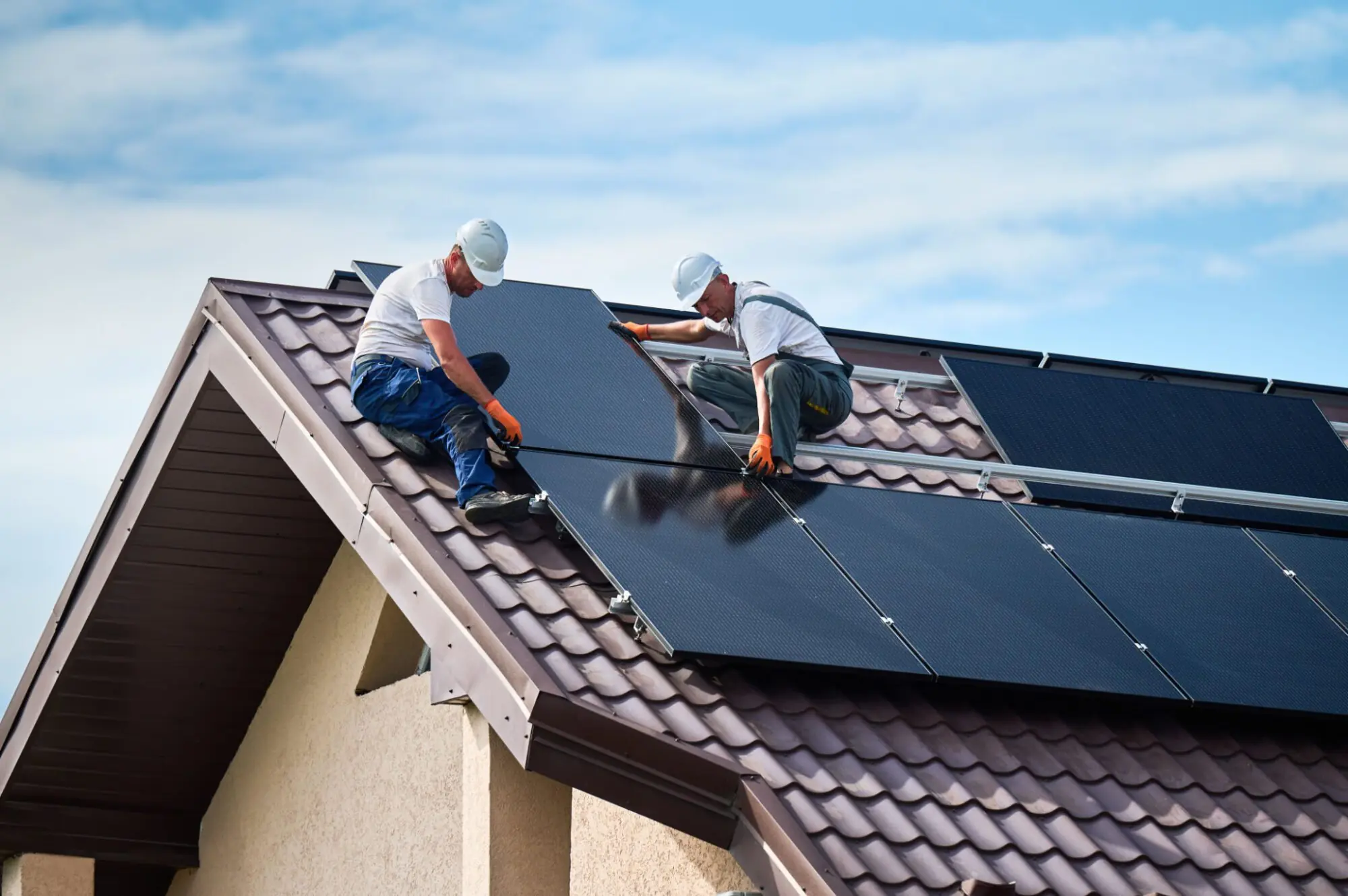
Solar panels seem almost magical you put them on your roof, and suddenly the sun is paying your electricity bill. But there’s no magic involved, just clever science. Here’s a plain-language breakdown of what’s really happening.
Step 1: Sunlight Hits the Panel
Each solar panel is made up of many smaller units called solar cells, usually built from a material called silicon. When sunlight hits these cells, it knocks electrons loose from the silicon atoms. This is called the “photovoltaic effect” photo meaning light, voltaic meaning electricity.
Step 2: Electricity Starts to Flow
Inside each cell are thin layers of silicon treated to create an electric field, similar to the two poles of a battery. Once sunlight frees up those electrons, the electric field pushes them to flow in one direction creating an electric current. Wires connect the cells together, collecting all that current into one usable stream of electricity.
Step 3: The Inverter Converts the Power
Here’s the catch: the electricity solar panels produce is direct current (DC), but most homes and appliances run on alternating current (AC). That’s where the inverter comes in a device installed alongside your solar system that converts DC power into the AC power your home actually uses.
Step 4: Power Goes Where It’s Needed
Once converted, the electricity flows into your home’s electrical panel, just like power from the grid would. It powers your lights, your fridge, your TV anything plugged in. If your panels produce more electricity than your home needs at that moment, the extra power can either be stored in a battery for later, or sent back to the utility grid (often earning you credit through a program called net metering, depending on your provider).
Step 5: What Happens at Night or on Cloudy Days?
Solar panels only generate electricity when there’s sunlight, so at night or during heavy cloud cover, your home draws power from the grid or from a home battery, if you have one installed. This is why most solar systems stay connected to the grid rather than operating completely independently it gives you a reliable backup so the lights never go out.
The Big Picture
In short, a solar system is really just four things working together: panels that catch sunlight, cells that turn it into electricity, an inverter that makes it usable, and a connection that lets you use or store that power whenever you need it. No moving parts, no fuel, no emissions. Just sunlight, quietly turned into power.
At Adexa Power World, we take care of every one of these steps for you from choosing the right panels for your roof to installing the inverter and getting your system connected, so switching to solar feels simple from day one.