
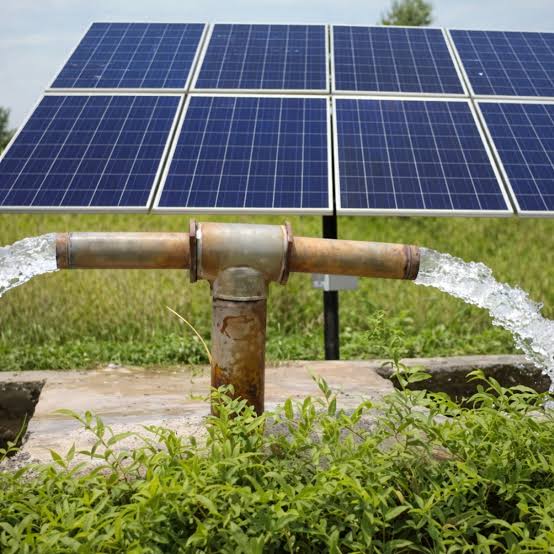
For millions of homes, farms, schools and clinics, getting water is a daily struggle. Wells and boreholes are only half the answer. Something has to lift that water out of the ground, and for years the options were hand pumps, which are slow, or diesel and grid-powered pumps, which are expensive to run and unreliable where power is scarce.
The solar submersible water pump changes that equation. It uses sunlight to lift water from deep underground, with no fuel, no electricity bill and very little maintenance. This post explains how it works, what you need to know before choosing one, and how to size a system properly.
What Is a Solar Submersible Pump?
A submersible pump sits inside the water source, such as a borehole or deep well, and pushes water up to the surface through a pipe. In a solar version, the pump is powered by solar panels instead of a generator or the grid.
A complete system usually includes:
- Solar panels that supply the power
- The submersible pump installed in the borehole
- A pump controller or solar pump inverter that matches power to the pump and protects it
- A water storage tank where the water is held for later use
- Pipes, cables and a water level sensor or float switch to complete the setup
How It Works, Step by Step
- Sunlight hits the panels, which generate electricity.
- The controller or pump inverter converts and regulates that power, and uses MPPT to extract as much as possible from the array.
- As the sun rises, the pump starts and gradually speeds up. As sunlight fades, it slows and then stops.
- Water is pushed up the rising main pipe into a storage tank.
- From the tank, gravity feeds taps, troughs, drip lines or irrigation systems, day or night.
The key idea is that water is stored, not electricity. Instead of paying for batteries, you pump during sunny hours into a tank and draw from the tank whenever you need. A tank is far cheaper and longer-lasting than a battery bank.
Why Choose Solar Over Diesel or Grid Pumps?
- No fuel costs. Once installed, the sun is free.
- Low running cost. There are few moving parts above ground and minimal servicing.
- Works where there is no grid. Ideal for farms, villages and remote institutions.
- Quiet and clean. No engine noise, fumes or oil spills near your water.
- Reliable and predictable. No waiting for fuel deliveries or dealing with power cuts.
- Matches demand naturally. Water use is highest on hot, sunny days, which is exactly when the pump works hardest.
- Long life. Panels last 25 years or more, and quality pumps can serve for many years with proper care.
Where Solar Pumps Are Used
- Household and community water supply
- Drip and sprinkler irrigation for crops and gardens
- Livestock watering
- Schools, clinics and churches
- Hotels, lodges and guesthouses
- Fish ponds and aquaculture
- Construction sites and small factories
DC or AC Pumps?
Solar submersible pumps generally come in two flavours.
DC pumps (often brushless): They run directly from the panels through a controller. They are efficient, simple and well suited to smaller needs and shallower depths.
AC pumps with a solar pump inverter: The inverter converts DC from the panels into AC at variable frequency. These handle larger flow rates and greater depths, and they allow use of standard, widely available pump types.
The right choice depends on how much water you need, how deep it is, and your budget. A professional assessment helps you avoid buying too much or too little.
How to Size a Solar Pump System
Sizing is where most mistakes happen. You need to answer three questions.
1. How Much Water Do You Need Per Day?
Add up household use, livestock, irrigation and any growth you expect. Express it in cubic metres per day (1 cubic metre = 1,000 litres).
2. What Is the Total Dynamic Head?
Total dynamic head (TDH) is the total effort the pump must make, measured in metres. It combines:
- Static water level: the depth from the ground surface to the water
- Drawdown: how far the water level drops while pumping
- Height to the tank or discharge point above ground
- Friction losses in the pipe, which grow with longer, narrower pipes and higher flow
3. How Many Sun Hours Do You Get?
Solar pumps work only while the sun shines. Your area’s average peak sun hours (the equivalent hours of full-strength sunlight per day) tell you how long the pump can effectively run.
A Worked Example (Illustrative Only)
- Daily water need: 20 m³
- Peak sun hours: 5 hours
- Required flow: 20 ÷ 5 = 4 m³ per hour
- Static level 40 m + drawdown 5 m + tank height 10 m + friction 5 m = 60 m TDH
The hydraulic power needed is roughly 650 W (water density × gravity × flow × head). Pumps are not 100% efficient, and at around 45% efficiency the pump needs about 1.4 kW of electrical power. Installers then size the solar array larger than the pump rating, often around 1.2 to 1.5 times, so the pump starts early and keeps running well even when sunlight is weaker.
These figures are for illustration. Real sizing depends on the exact pump curve, pipe sizes and site conditions, so always have the design checked by a qualified supplier.
Check the Borehole Before You Buy
A pump can only deliver what the borehole can supply. Before choosing, confirm:
- Yield: how much water the borehole can give without running dry
- Water quality and sand content: sand and silt wear pumps quickly; some pumps are built to resist it
- Borehole diameter: the pump must physically fit
- Depth and water level: including seasonal changes between the wet and dry seasons
A proper yield test by a driller or hydrogeologist prevents expensive surprises.
Features Worth Looking For
- Dry-run protection: shuts the pump off if the water level gets too low, preventing burnout
- Tank-full cutoff: a float switch or level sensor stops pumping when the tank is full
- MPPT controller: gets the most out of the panels all day
- Soft start: reduces strain on the pump and cables
- Stainless steel or corrosion-resistant construction: extends pump life
- Overload and over-voltage protection: guards against electrical faults
- Remote monitoring (optional): useful for larger or distant sites
- A clear warranty and available spare parts
Installation Tips
- Point the panels toward the sun at the correct angle for your location and keep them free of shade
- Mount the array securely and consider fencing or anti-theft fixings
- Use correctly sized cables to avoid voltage loss over long runs
- Install a safety rope or cable to lift the pump later, and never lift it by the power cable
- Fit a non-return valve to stop water flowing back down into the borehole
- Earth the system and fit surge protection for storm protection
- Use a tank large enough for at least one to two days of demand
Simple Maintenance
Solar pumps are famously low-maintenance, but a little care goes a long way:
- Clean the panels regularly to remove dust and bird droppings
- Check connections, pipe joints and the tank for leaks
- Watch for drops in flow, which can signal wear, a blocked intake or a falling water table
- Keep the controller in a shaded, ventilated, weatherproof enclosure
- Have the pump pulled and inspected by a technician if performance falls noticeably
Common Mistakes to Avoid
- Guessing the depth and head instead of measuring
- Undersizing the panels, which makes the pump run late and stop early
- Skipping the storage tank and expecting water at night
- Ignoring borehole yield, causing the pump to run dry
- Choosing on price alone without checking warranty, service and spare parts
- No dry-run or surge protection
- Poor-quality cabling and joints, which waste power and fail early
So…
A solar submersible pump turns the sun into a dependable water supply. It removes fuel costs, reduces breakdowns and keeps water flowing to the places that need it most, from homes and farms to schools and clinics. With the right sizing, a well-tested borehole and quality equipment, it can deliver clean water for many years.
Thinking of a solar water pumping system for your home, farm or business? Talk to Adexa Power World about the right pump, panels and controller for your water needs.