
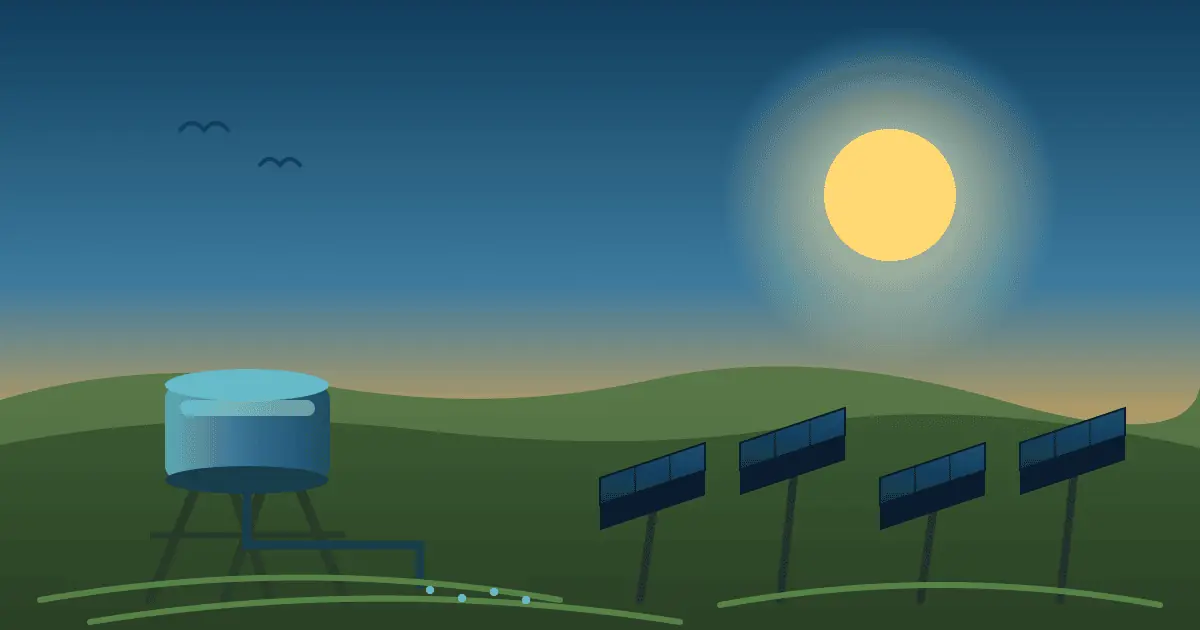
For most Ugandan farmers, the dry season has always meant the same painful choice: watch the crops wilt, or spend hours and money hauling water from a distant well, stream, or vendor. For decades, the “solution” has been a diesel pump: loud, thirsty for fuel, and expensive to keep running. At Adexa Power World, we think it’s time that choice disappeared for good.
Two Problems, One Roof: Why Solar and Water Belong Together
Most people think of solar power and water access as separate challenges. In Uganda, they are the same challenge wearing two hats. Grid electricity still hasn’t reached most rural areas, so wherever the grid stops, mechanized water pumping stops with it leaving communities and farms dependent on rivers, unprotected springs, or costly diesel generators. That’s precisely where a solar-and-water company has an advantage a pure electrician or a pure driller doesn’t: we can design the power source and the water system as one integrated solution, not two separate headaches.
Uganda happens to be sitting on an enormous, underused resource for exactly this purpose. The country receives some of the most consistent solar irradiation on the continent more than enough to power a borehole pump, a drip irrigation line, or an entire piped water scheme, day in and day out, without a drop of diesel.
What a Solar Water Pumping System Actually Looks Like
It’s simpler than most people expect:
- Solar panels capture sunlight and generate electricity no fuel deliveries, no noisy generator.
- A submersible or surface pump uses that electricity to lift water from a borehole, well, stream, or reservoir.
- An elevated storage tank (in piped schemes) lets gravity do the rest of the work, delivering water to taps or irrigation lines even when the sun isn’t shining.
- Optional drip or sprinkler irrigation stretches every liter further, which matters enormously in areas already short on water.
There’s no fuel bill, minimal moving parts, and once installed, the running cost is close to zero. Independent field studies of solar pumping systems in rural Uganda have tracked systems performing reliably across an entire year including during the rainy season with efficiency typically in the mid-60s to low-70s percent range even after accounting for dust and routine wear. In plain terms: the technology isn’t a pilot experiment anymore. It works, season after season.
Why This Matters More in 2026 Than Ever
Rural electrification in Uganda is still climbing slowly, which means diesel remains the default for many farms and communities that need mechanized water. That gap is exactly why national and district-level water authorities have been rolling out solar-powered piped schemes at increasing scale from refugee settlements in the north to cattle-corridor districts in the south specifically because they’re cheaper to run and easier to sustain than diesel alternatives. The direction of travel is clear: solar isn’t the alternative water pumping technology anymore. It’s becoming the default one.
For farmers specifically, the payoff shows up in the harvest calendar. A borehole and a solar pump mean irrigation isn’t limited to whenever it rains. Vegetables, fruit, and cash crops can be grown through the dry months instead of only during two short rainy windows a year which is often the difference between one harvest and three.
The Part Nobody Talks About: Maintenance
Here’s an uncomfortable truth in the solar water pumping conversation across Uganda right now: installation has outpaced maintenance capacity. Plenty of pumps have gone into the ground over the last few years, but a shortage of trained technicians and spare parts in rural areas means that when something breaks, some systems simply sit unused. A solar pump that isn’t maintained is no better than no pump at all.
This is why Adexa Power World treats maintenance and after-sales support as part of the product, not an afterthought. A system is only as good as its tenth year of operation, not just its first day.
What This Means for You
Whether you’re a smallholder farmer trying to irrigate through the dry season, a school or health center that needs a dependable water supply, or a community leader planning a piped water scheme, the technology to do it without diesel and without waiting for grid electricity already exists and it pays for itself over time in fuel costs alone.
That’s the work we do at Adexa Power World: pairing the right solar system with the right water solution, built for the realities of where you actually live and farm not a one-size-fits-all import.
Thinking about a solar water pump, borehole system, or piped water scheme for your farm, home, or community? Get in touch with Adexa Power World and let’s design a system built around your land, your water source, and your budget.