
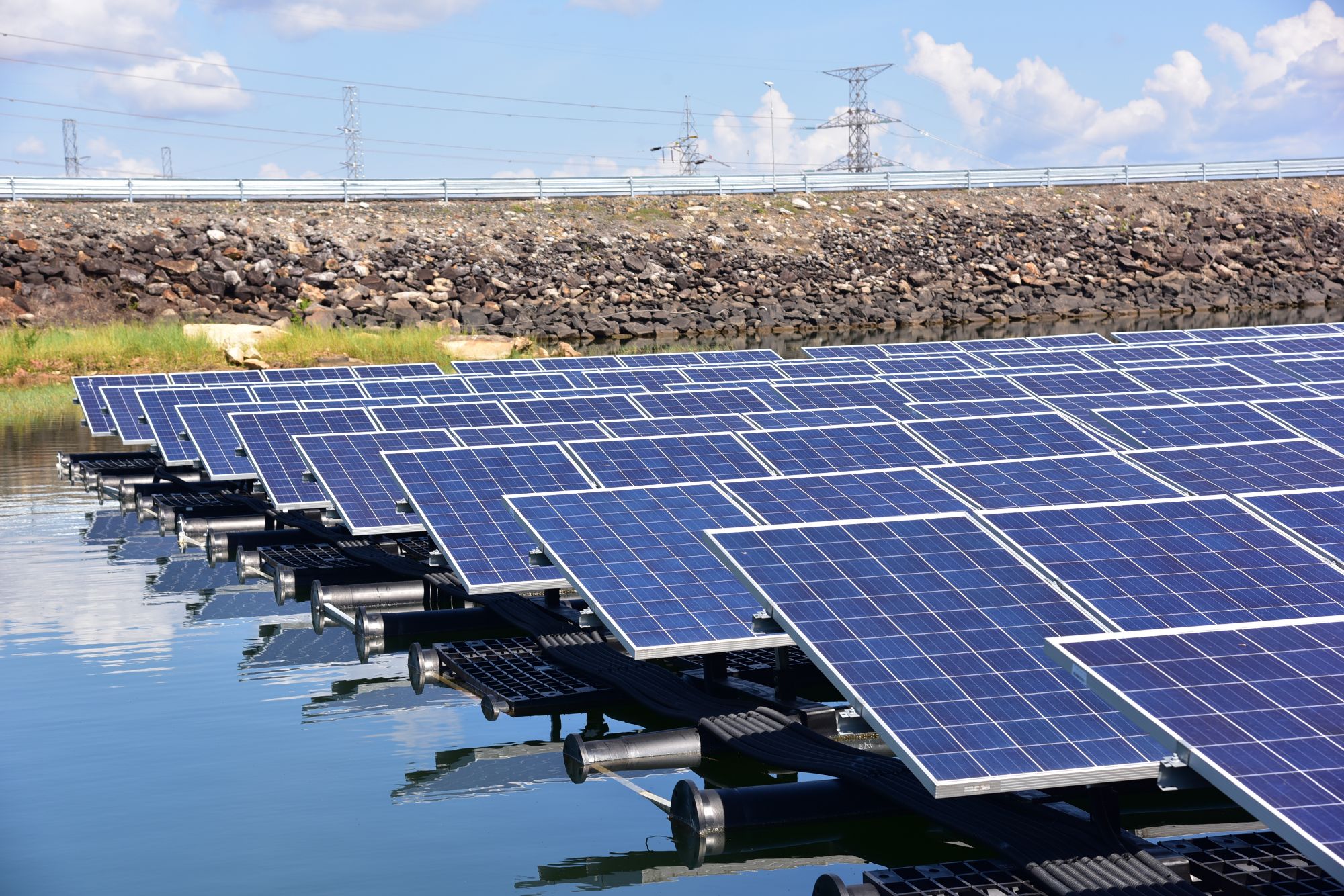
Most people picture solar panels on rooftops or sprawling desert farms. A quieter idea is taking off on reservoirs, where panels float on the water’s surface, often right beside a hydropower dam. It sounds like a gimmick, but the pairing solves real problems for both technologies.
Why Put Solar on Water?
Land is expensive and often contested. Farmland, forests, and communities all compete for the same space. Reservoirs are already developed, and the water surface sits unused. Floating arrays use buoyant platforms anchored to the bed or shore, so they take up no productive land at all.
Water also helps the panels themselves. Solar cells lose efficiency as they heat up, and the cooler air above water can keep them running a bit better than ground-mounted panels in the same climate. The gain varies by site, but it is a welcome bonus.
The Hydropower Advantage
The real magic happens when floating solar connects to an existing dam. Hydropower plants already have transmission lines, substations, and grid connections, which are some of the costliest parts of any energy project. Floating panels can plug into that infrastructure instead of building it from scratch.
The two sources also balance each other. Solar produces power when the sun shines. Hydropower can be dialed up or down quickly. On a sunny afternoon, the dam can hold back water while the panels generate. When clouds roll in or the sun sets, the turbines release it. The reservoir effectively works as a giant battery.
Protecting Water Resources
Covering part of a reservoir can reduce evaporation, which matters in hot, dry regions where water loss is a serious concern. Shade can also slow algae growth in some conditions. The key word is “part”: developers generally aim to cover only a modest fraction of the surface so the ecosystem and the dam’s operation are not disrupted.
The Challenges
Floating solar is not without hurdles. Systems must handle wind, waves, and changing water levels. Mooring and anchoring add cost and engineering complexity. Corrosion and long-term durability in humid, wet environments are still being studied, and the effects on aquatic life need careful monitoring at each site.
Why It Matters for the Future
For countries with plenty of hydropower and strong sunshine, this hybrid approach is especially promising. It adds clean capacity without new land use or major grid expansion, and it makes existing assets work harder. As panel and flotation costs continue to fall, expect more reservoirs to gain a second life as solar farms.