
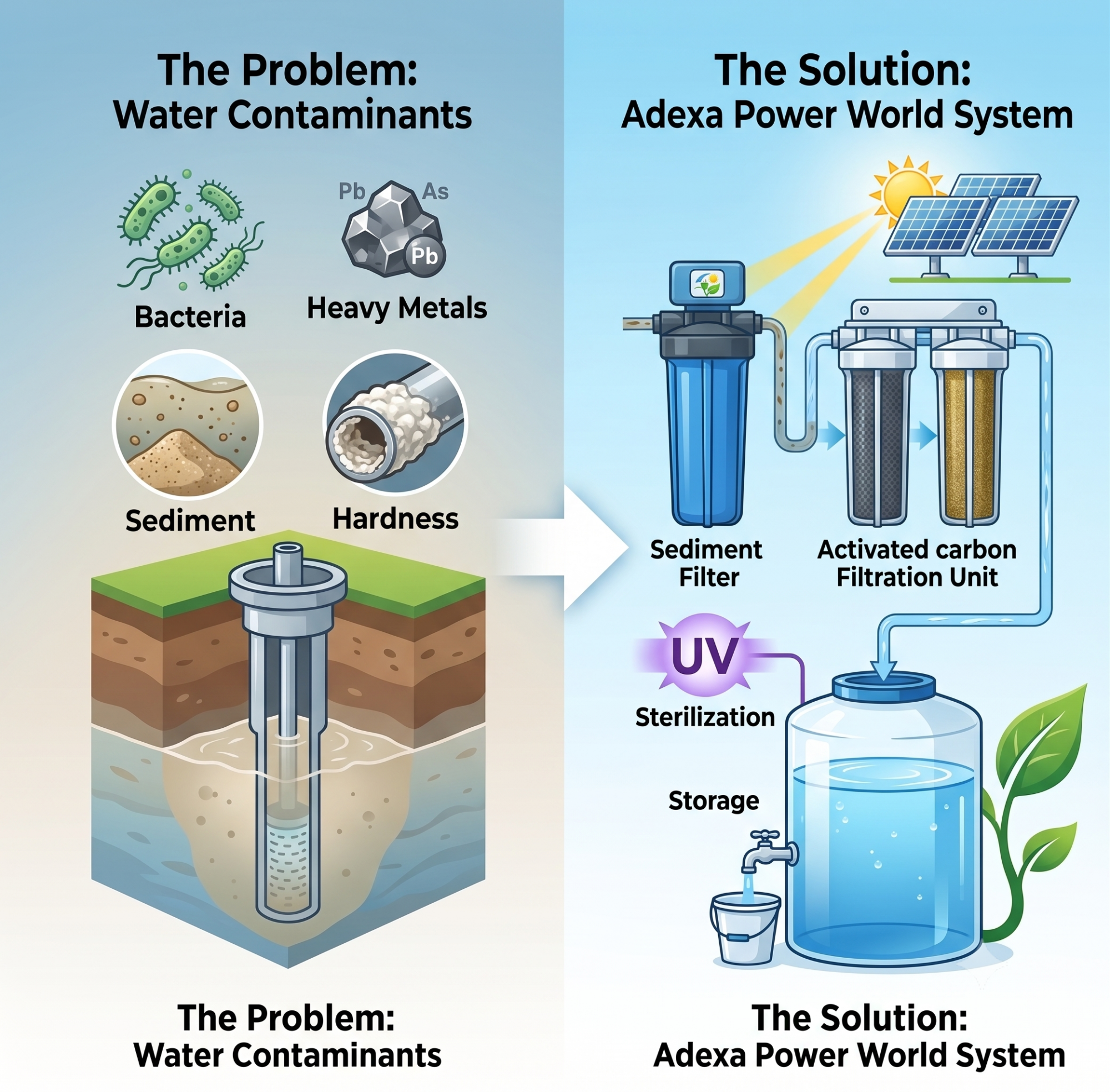
Understanding the Hidden Risks in Your Water Supply
Clean water is essential for drinking, cooking, farming, sanitation, and overall well-being. While many Ugandans rely on boreholes, wells, springs, rivers, rainwater harvesting, and piped water systems, not all water sources are free from contamination. Some contaminants are visible, while others are invisible and can only be detected through proper water testing.
Understanding the common contaminants found in Uganda’s water sources is the first step toward protecting your family’s health and ensuring a safe water supply. In this article, we explore the most common water contaminants, their sources, potential health effects, and practical ways to improve water quality.
Why Water Quality Matters
Contaminated water can affect human health, damage plumbing systems, reduce the lifespan of water pumps, and impact agricultural productivity. Drinking unsafe water may expose people to harmful microorganisms, chemicals, and sediments that can cause illness or long-term health complications.
Regular water quality checks and proper treatment are essential for maintaining a safe and reliable water supply.
1. Bacteria and Disease-Causing Microorganisms
One of the most common forms of water contamination in Uganda is the presence of harmful bacteria, viruses, and parasites. These microorganisms often enter water through human waste, animal waste, leaking septic tanks, or surface runoff during heavy rains.
Common Sources
- Unprotected wells and springs
- Flooded water sources
- Poor sanitation practices
- Surface water contamination
Possible Health Effects
- Diarrhoea
- Typhoid
- Cholera
- Dysentery
- Stomach infections
Protecting water sources and treating drinking water before use can significantly reduce these risks.
2. Sediments and Suspended Particles
Many boreholes, rivers, and shallow wells contain sand, silt, clay, and other suspended particles. Although these materials are not always harmful, they can make water appear cloudy and may damage pumps, taps, and household appliances over time.
Common Signs
- Cloudy water
- Grit in stored water
- Reduced pump efficiency
- Frequent pipe blockages
Installing sediment filters helps improve water clarity and protects your water system.
3. Iron
Iron is naturally found in many underground water sources across Uganda. Although small amounts are generally not harmful, high concentrations can cause several household problems.
Common Signs
- Brown or reddish water
- Rust-coloured stains on sinks and toilets
- Metallic taste
- Discoloured laundry
Iron removal systems can effectively improve water quality and prevent staining.
4. Manganese
Manganese often occurs alongside iron in groundwater. Excessive levels can leave dark stains on plumbing fixtures and affect the taste of water.
Common Signs
- Black stains on sinks
- Dark deposits inside pipes
- Bitter or metallic taste
Specialized filtration systems are available to reduce manganese levels.
5. Fluoride
Some groundwater sources naturally contain fluoride. While small amounts can strengthen teeth, excessive fluoride over long periods may lead to dental or skeletal fluorosis.
Common Signs
- White or brown spots on teeth
- Bone and joint problems after prolonged exposure
Water testing is the best way to determine fluoride levels before selecting an appropriate treatment solution.
6. Nitrates
Nitrates can enter groundwater through agricultural fertilizers, livestock waste, and leaking septic systems.
Common Sources
- Farming activities
- Animal waste
- Poor waste disposal
- Septic tank leakage
High nitrate levels are especially dangerous for infants and young children.
7. Hard Water Minerals
Hard water contains high levels of dissolved calcium and magnesium. Although hard water is generally safe to drink, it can create maintenance challenges.
Common Signs
- White deposits on taps
- Soap not lathering easily
- Reduced efficiency of water heaters
- Scaling inside pipes
Water softening systems help reduce mineral buildup and improve appliance performance.
8. Agricultural Chemicals
In farming communities, pesticides and herbicides may reach nearby water sources through runoff, particularly after heavy rainfall.
Potential impacts include:
- Unpleasant taste or smell
- Environmental pollution
- Reduced water quality
Protecting water sources from agricultural runoff is essential for maintaining safe drinking water.
9. Organic Matter
Leaves, algae, and decaying vegetation can enter surface water sources, causing unpleasant tastes, odors, and discoloration.
Although not always harmful, excessive organic matter can encourage bacterial growth if left untreated.
10. Microplastics and Household Waste
Growing urbanization has increased the presence of plastic waste in rivers, lakes, and drainage systems. Over time, plastics can break down into tiny particles that contaminate water sources.
Reducing plastic pollution and protecting natural water bodies benefits both public health and the environment.
How to Know If Your Water Is Contaminated
Not all contaminants can be seen or smelled. However, you should investigate your water supply if you notice:
- Cloudy or discoloured water
- Unpleasant taste or odor
- Rust stains on fixtures
- Sand or grit in water
- Frequent stomach illnesses
- Scale buildup on taps and appliances
- Reduced water pressure caused by sediment buildup
If you observe any of these signs, consider having your water tested by a qualified laboratory.
How to Improve Water Quality
Improving water quality begins with identifying the source of contamination. Depending on the results, appropriate solutions may include:
- Installing sediment filters
- Using activated carbon filtration
- Installing iron and manganese removal systems
- Treating water with UV purification
- Chlorinating water where appropriate
- Regular cleaning of water storage tanks
- Protecting boreholes and wells from surface contamination
- Performing routine water quality testing
Professional advice ensures the right treatment system is selected for your specific water source.
Why Professional Water Solutions Matter
Every water source is different. A treatment solution that works for one property may not be suitable for another. Professional assessment helps identify the exact contaminants present and recommends the most effective filtration or purification system.
Investing in proper water treatment not only protects your family’s health but also extends the lifespan of pumps, pipes, storage tanks, and household appliances.
Conclusion
Clean water is one of the most valuable resources for any home, business, farm, or institution. While Uganda has abundant water sources, contamination can occur naturally or through human activities. Understanding the most common water contaminants allows property owners to make informed decisions about testing, filtration, and treatment.
Regular maintenance, proper water treatment, and professional system design can help ensure a safe, reliable, and sustainable water supply for years to come.
Protect Your Water with Adexa Power World
At Adexa Power World, we provide reliable water solutions designed to improve water quality and ensure dependable supply. From borehole systems and solar water pumping to water storage, filtration, and professional installation services, our experienced team is committed to helping homes, farms, businesses, schools, and institutions access clean and reliable water.
Contact Adexa Power World today to learn more about our complete water solutions and let us help you build a healthier, more sustainable water system.