
Solar Irrigation Systems by Adexa Power World
Water is one of the most important requirements for successful farming. However, many farmers depend mainly on rainfall or use fuel-powered and grid-connected pumps to move water to their fields. These options can become expensive, unreliable, or difficult to operate, particularly during dry seasons and in areas with limited access to electricity.
Solar irrigation systems offer an alternative by using energy from the sun to pump and distribute water for agricultural purposes. They can support farms of different sizes, from small gardens and nurseries to commercial farms, livestock projects, and community agricultural initiatives.
Adexa Power World helps customers explore solar energy solutions that can support reliable water access while reducing dependence on conventional energy sources.
What is a solar irrigation system?
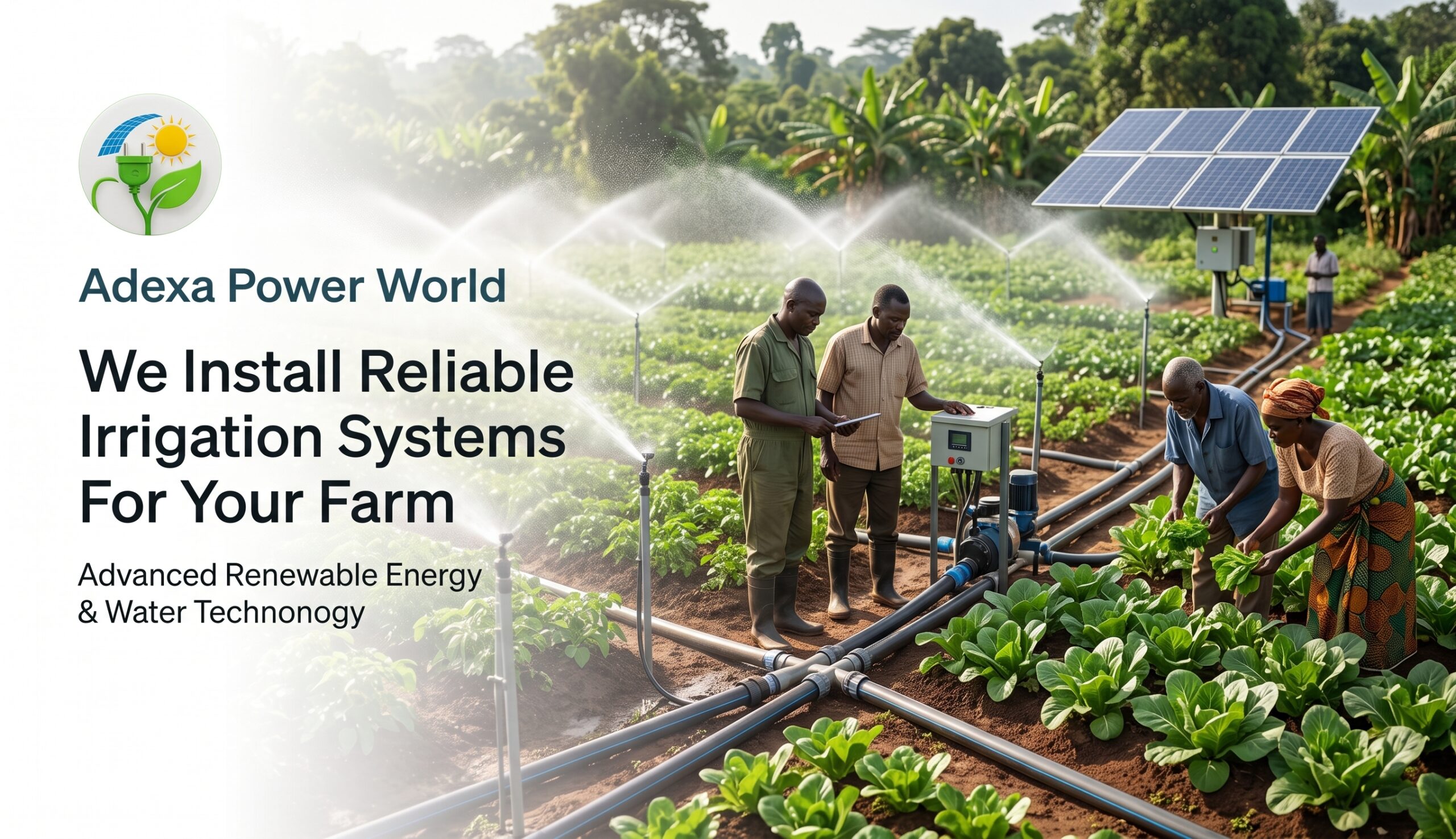
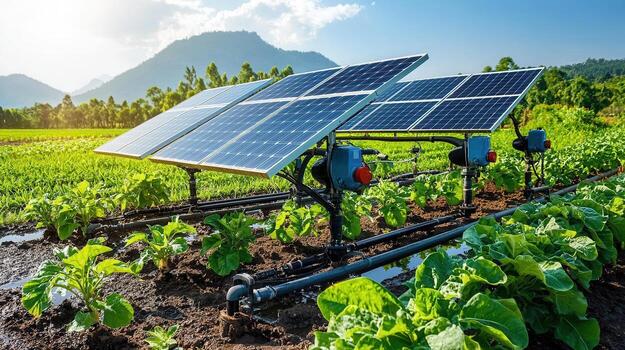
A solar irrigation system is an arrangement that uses solar energy to power equipment for pumping or distributing water. Solar panels capture sunlight and convert it into electricity. That electricity can operate a water pump, which moves water from a source to a storage tank, field, greenhouse, livestock area, or irrigation network.
A solar irrigation setup may include solar panels, a pump, a pump controller, mounting structures, electrical protection equipment, pipes, storage tanks, sprinklers, drip lines, or other water-distribution components. The final design depends on the farm’s location, water source, crops, land size, and daily water requirements.
There is no single system that is suitable for every farm. A proper assessment is important before equipment is selected or installed.
How do solar irrigation systems work?
The basic operating process is simple. Solar panels produce electricity during daylight hours. A controller manages the power supplied to the pump. The pump draws water from an appropriate source and sends it through pipes to the required destination.
Water may be used immediately or stored in a tank for later distribution. Some systems operate directly during sunny periods, while others are designed around water storage, batteries, or a combination of both. The right approach depends on the farm’s irrigation schedule and the availability of sunlight.
A typical project involves the following stages:
- Assessment: The site, water source, land, crops, and water requirements are reviewed.
- System design: The appropriate pump, solar capacity, pipes, storage, and irrigation method are considered.
- Installation: The equipment is installed and connected safely.
- Testing: The system is checked to confirm that water reaches the intended location.
- Training and support: The customer receives guidance on operation, routine checks, and maintenance.
Benefits of solar irrigation
Reduced reliance on fuel
Fuel-powered pumps require regular purchases of petrol or diesel. Solar irrigation uses sunlight as its primary energy source, which can reduce dependence on fuel for water pumping. This may be especially useful when fuel prices are high or supplies are difficult to access.
Support for farming during dry periods
Rainfall is not always consistent with the water requirements of crops. Solar irrigation can help farmers provide water during dry spells when a suitable water source is available. This can support crop growth, nursery operations, vegetable production, orchards, and other agricultural activities.
Potentially lower operating costs
Solar irrigation requires an initial investment in equipment and installation. Once installed, the system can use freely available sunlight instead of requiring daily fuel purchases. The overall financial benefit depends on the system design, water demand, maintenance needs, and the cost of the alternative energy source.
Useful in areas without reliable grid electricity
Many farms are located far from the electricity grid or experience unreliable power supply. Solar-powered pumping can provide an option for sites where extending grid electricity is impractical or where power interruptions affect agricultural operations.
Clean and renewable energy
Solar power is renewable and produces electricity without the direct fuel combustion associated with petrol and diesel pumps. Using solar energy for irrigation can help agricultural projects reduce their environmental impact while making productive use of available sunlight.
Flexible applications
Solar irrigation can be adapted to different agricultural requirements. It may support smallholder farms, commercial agriculture, greenhouses, nurseries, livestock watering, fish-farming activities, institutional gardens, landscaping, and community water projects.
Common types of solar irrigation applications
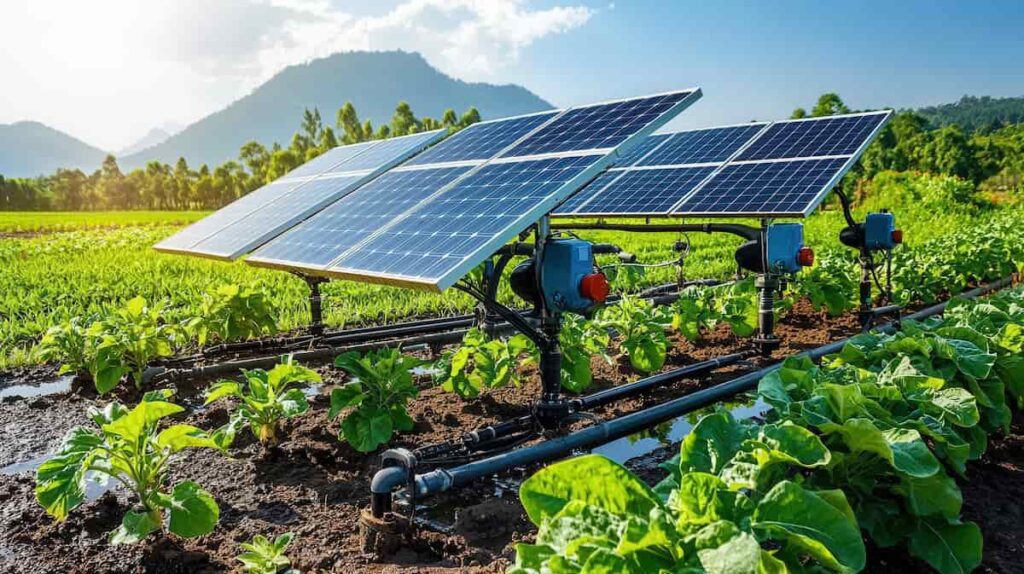
Drip irrigation
Drip irrigation delivers water slowly and directly near the roots of plants. It can be suitable for vegetables, fruit trees, flowers, and other crops that benefit from controlled water application.
Sprinkler irrigation
Sprinkler systems distribute water over crops in a pattern similar to rainfall. They may be used for field crops, lawns, gardens, and certain horticultural applications, depending on water pressure and system design.
Greenhouse irrigation
Greenhouses often require controlled and regular watering. Solar-powered pumping can support drip lines, misting systems, and other arrangements used in protected agriculture.
Livestock watering
Solar pumping can help move water to troughs, tanks, and livestock areas. Storage can also help make water available at times when the pump is not operating.
Water storage and distribution
Some solar systems pump water into an elevated or ground-level tank. The stored water can then be distributed through gravity, pipes, sprinklers, drip lines, or another suitable method.
What should be considered before installation?
A successful solar irrigation project requires more than installing panels and a pump. The system must be designed around the conditions of the site and the needs of the customer.
Important considerations include:
- The location, depth, and reliability of the water source.
- The quality of the water and whether filtration is necessary.
- The amount of water required each day.
- The height and distance the water must travel.
- The size and layout of the land.
- The type of crops or agricultural activities involved.
- The preferred irrigation method.
- The available sunlight and seasonal weather conditions.
- The need for water storage.
- Future expansion plans.
- Routine maintenance and access to technical support.
A professional assessment helps prevent under-sizing, unnecessary costs, and poor water delivery. It also helps determine whether the water source can sustainably support the intended use.
Why professional design matters
The performance of a solar irrigation system depends on several components working together. An incorrectly sized pump may fail to deliver enough water. An undersized solar array may limit operating hours. Poorly planned pipes may cause pressure losses or uneven water distribution.
Professional design considers the relationship between the water source, pump, solar array, irrigation network, storage, and agricultural schedule. It also takes safety, maintenance, future upgrades, and customer budget into account.
Adexa Power World can help customers understand these requirements and identify a solar energy approach that suits their agricultural project.
Is solar irrigation suitable for every farm?
Solar irrigation can be a practical option for many agricultural projects, but suitability depends on the site. A reliable water source is essential. The project must also have adequate sunlight, a realistic water requirement, and an irrigation layout that can work with the selected pump.
Solar irrigation may not be the best solution where the water source is inadequate, the required pumping demand is unusually high, or the site has conditions that require a different technical arrangement. A site assessment provides a more accurate recommendation than a general estimate.
Solar irrigation and the future of agriculture
Agriculture is changing as farmers look for more efficient ways to manage water, energy, and operating costs. Solar irrigation can form part of a broader approach to climate-smart agriculture by combining renewable energy with better water management.
It can help farms become less dependent on rainfall and conventional fuel while supporting more planned irrigation. When combined with water storage, efficient irrigation methods, soil management, and responsible water use, solar energy can contribute to more resilient agricultural operations.
Choose a solar energy partner you can trust
The right solar irrigation system begins with understanding the customer’s actual needs. It should be designed for the water source, farm activities, land size, and intended use rather than selected as a standard package without assessment.
Adexa Power World supports customers who want to explore solar-powered irrigation and other renewable energy solutions. From initial consultation to system planning, installation, and after-sales guidance, the company can help customers take the next step toward dependable solar-powered water pumping.
Are you considering solar irrigation for a farm, greenhouse, garden, livestock project, or agricultural business? Contact Adexa Power World to discuss your needs and request a professional assessment.
Conclusion
Solar irrigation systems provide a renewable way to pump and distribute water for agriculture. They can help reduce reliance on fuel, support irrigation during dry periods, serve areas with limited grid access, and provide flexible options for different farming activities.
The most suitable solution depends on the site, water source, crops, budget, and irrigation requirements. With proper assessment and professional installation, solar energy can become a valuable part of a farm’s water-management strategy.
Adexa Power World is ready to help you explore the possibilities of solar irrigation.