
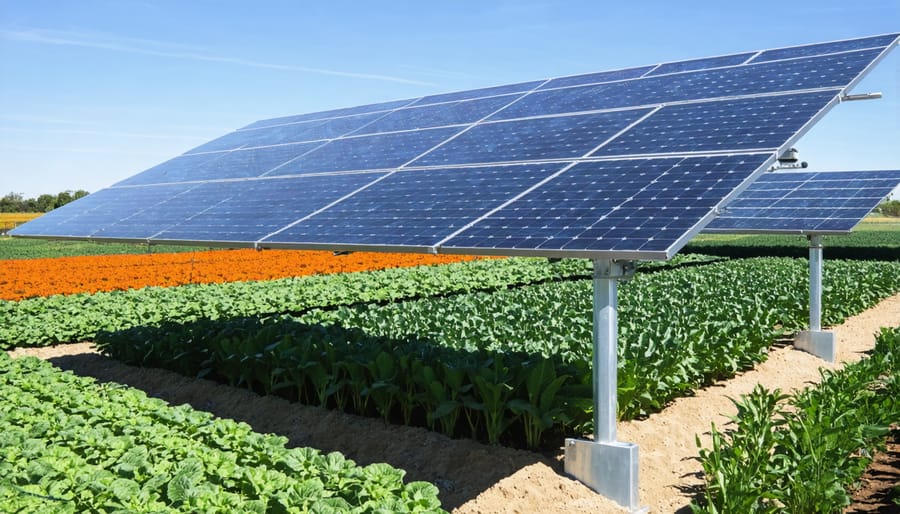
What if the same piece of land could grow your food and generate your electricity, at the same time?
It sounds too good to be true, but it’s a real and fast-growing idea called agrivoltaics: combining solar panels and agriculture on the same land. For communities across Africa, where land is precious and energy access is still a daily challenge, this could be one of the smartest solar innovations of our time.
The Old Problem: Land or Power?
Traditionally, a solar farm means fencing off acres of land and covering it with panels. For countries where farming feeds families and drives the economy, that creates a hard question: do we use the land for crops or for energy?
Agrivoltaics says: why choose?
How It Works
Solar panels are mounted higher than usual, or spaced out in rows, so that sunlight, rain and farm workers can still reach the ground beneath. Crops grow in the gaps and in the partial shade under the panels. The farmer harvests food, and the panels generate clean power from the same sunshine.
The result is a partnership where each side helps the other.
Why Plants and Panels Get Along
1. Shade protects crops from heat stress. In strong equatorial sun, too much heat can scorch leafy vegetables, tomatoes and peppers. Partial shade from panels can reduce that stress and help plants keep their moisture.
2. Less water is lost. Shaded soil dries out more slowly, which means less irrigation, a real benefit in dry spells.
3. Plants cool the panels. Crops release moisture through their leaves, which slightly cools the air around the panels. Solar panels work better when they are cooler, so efficiency can improve.
4. Land earns twice. A farmer can earn from the harvest and from the electricity, or from leasing space for panels, instead of depending on a single income.
Which Crops Do Well?
Not every crop loves shade, but many do. Good candidates include:
- Leafy greens such as spinach, sukuma wiki (kale) and amaranth
- Tomatoes, peppers and other vegetables that suffer in harsh midday sun
- Herbs and some root crops
- Grazing space for goats, sheep and poultry beneath raised panels
Crops that need full, direct sunlight all day, such as maize in some conditions, may need more careful design and spacing.
Powering the Farm Itself
The benefits go beyond the field. The electricity generated can run:
- Solar water pumps for reliable irrigation
- Cold storage that keeps produce fresh and cuts post-harvest losses
- Milling and processing machines that turn raw crops into higher-value products
- Lighting and security for the farm and nearby homes
For many farmers, spoilage and unreliable power eat into profits. Putting solar right on the farm tackles both problems at once.
Is It Right for Your Land?
Agrivoltaics isn’t one-size-fits-all. A good design depends on your location, soil, crop choice, panel height and your energy needs. Getting those details right at the start is what separates a thriving system from a disappointing one.
That’s where an experienced solar partner makes the difference: assessing the site, sizing the system properly and designing it around how you actually farm.
The Bottom Line
The sun already shines on our fields every day. Agrivoltaics simply asks us to use that light twice: once to grow, and once to power.
At Adexa Power World, we believe the future of energy and the future of food can grow side by side. If you’re a farmer, estate owner or business thinking about bringing solar to your land, we’d love to talk about what’s possible.
Ready to make your land work harder? Contact Adexa Power World today for a free consultation.